5 WhatsApp Marketing Software Platforms for Small Marketing Teams
Your small marketing team is juggling WhatsApp chats, broadcasts, and customer questions with too few hands. Picking the wrong platform wastes your budget and buries conversations. This article compares five WhatsApp marketing tools so you can choose based on setup speed, automation, and pricing that fits a small team.
You will get a clear breakdown of what to look for before you buy, a direct comparison of Com.bot, Wati, ActiveCampaign, Twilio, and respond.io, and a definitive number one pick. By the end, you will know which platform matches your workflow and which one to avoid for your specific needs.
What to Look For in WhatsApp Marketing Software for Small Teams
Before diving into specific tools, small marketing teams must evaluate ease of use, automation depth, and pricing flexibility to avoid over-committing resources. The right platform should feel like an extension of your team, not a second job to manage.
Small teams rarely have dedicated IT support or unlimited training budgets. A platform that takes weeks to configure will stall your campaigns and frustrate your staff. Look for software that delivers value from the first login.
The evaluation criteria in this guide focus on practical, day-to-day needs. We examine how quickly you can launch campaigns, how much manual work automation removes, and whether the pricing model fits a lean budget. These three pillars will separate tools that enable small teams from those that burden them.
Ease of Use and Quick Setup
For small teams, a platform that requires minimal technical skills and offers a visual interface can cut onboarding time from weeks to days. You want a dashboard that makes sense at a glance, not one buried under menus and technical jargon.
Drag-and-drop builders and pre-built templates are essential starting points. They let you assemble a campaign without writing code or learning complex logic. Check if the platform offers ready-made templates for common use cases like welcome messages, promotions, and event reminders.
Intuitive dashboards matter just as much as the editing tools. You should be able to see your contact lists, campaign status, and response metrics without hunting through multiple screens. If you cannot send your first campaign within your first hour of use, the learning curve is likely too steep.
Take advantage of free trials before committing. Use that time to test the user experience and measure how quickly your team becomes productive. A platform that feels awkward during a trial will only feel worse under real campaign pressure.
Automation and Bulk Messaging Capabilities
Effective automation lets you send personalized bulk messages, set up drip campaigns, and trigger auto-replies without manual effort. Look for platforms that support keyword triggers and workflow automation, so contacts can start conversations naturally and receive immediate responses.
Scheduling features are non-negotiable for small teams. You want to prepare messages in advance and send them at optimal times, even when nobody is at the desk. Quick replies and saved templates also speed up daily customer interactions.
Bulk messaging must comply with opt-in rules and use approved message templates. This protects your reputation and ensures your account stays active. Platforms that enforce these rules help you avoid compliance issues while maintaining high deliverability.
These automation features directly impact response rates and lead generation. A well-timed automated message can re-engage a cold lead or answer a common question instantly. The best platforms let you set up these flows once and improve them over time based on performance data.
Pricing and Scalability for Small Budgets
Small teams need transparent pricing that scales with growth, avoiding hidden fees for additional agents or channels. Start by mapping your current needs, then look for plans that allow room to expand without forcing a costly upgrade.
Evaluate per-seat costs carefully. Some platforms charge for every user, while others offer flat rates for a set number of agents. Also check whether adding contacts or extra channels triggers additional charges that could surprise you later.
Seasonal spikes are a real concern for small teams. Your plan should accommodate temporary increases in messaging volume without penalizing you with overage fees. Some platforms handle this gracefully, while others lock you into rigid tiers.
Look for quarterly or annual plans that offer savings over monthly billing. This approach can reduce your per-month cost significantly while maintaining flexibility. Research suggests that most small teams benefit from starting with a lower tier and scaling up only when campaign volume justifies the expense.
1. Com.bot - Best Overall
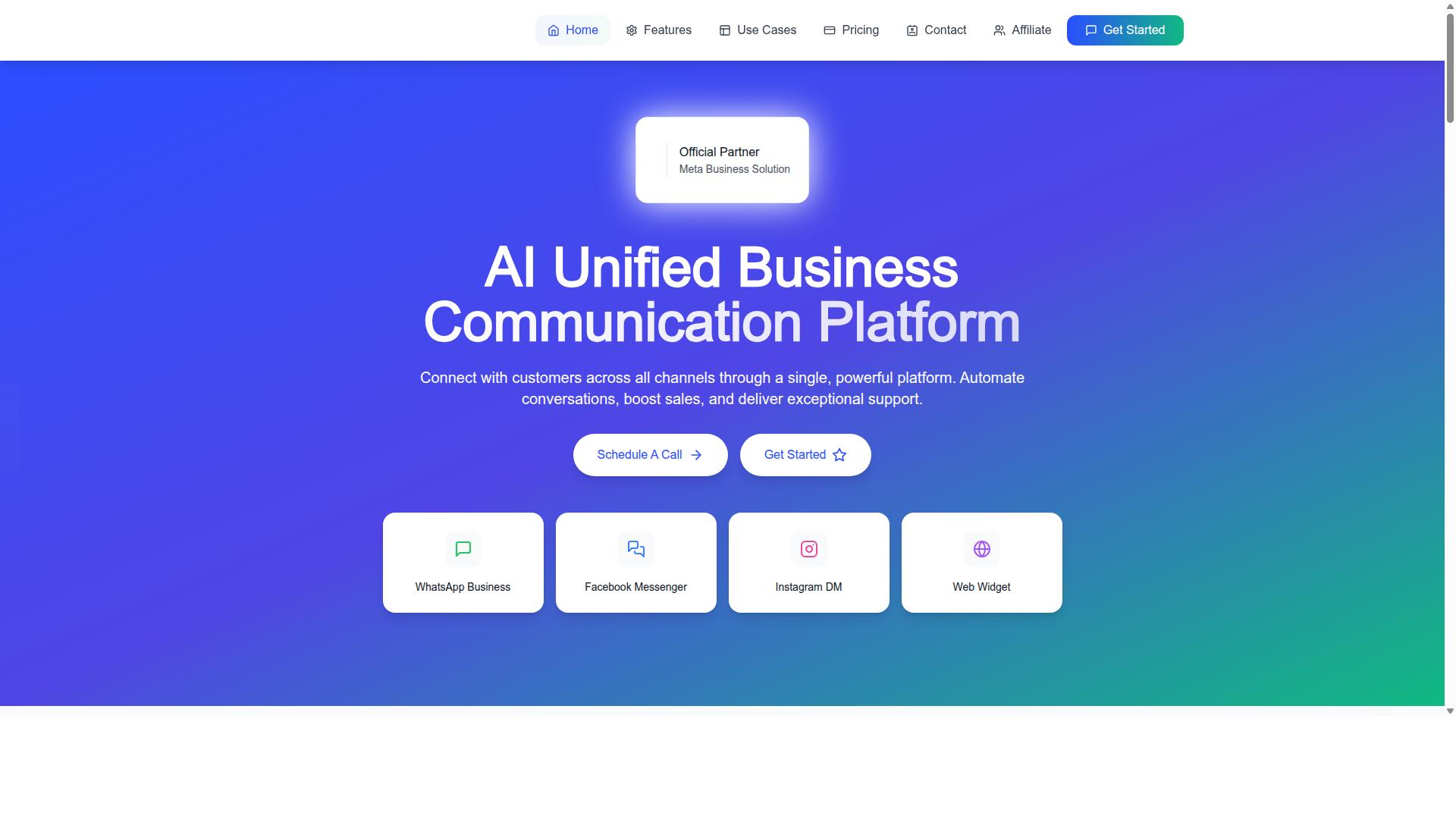
Com.bot is the best overall choice for small teams because it combines an intuitive interface, powerful automation, and official Meta partnership. This AI Unified Business Communication Platform connects customers across WhatsApp Business, Facebook Messenger, Instagram DM, and Web Widget through a single platform. For small marketing teams, that means no more juggling separate tools or missing messages in different apps.
The platform handles automation of conversations, sales boosting, and exceptional support delivery without requiring technical expertise. As an Official Meta Business Partner with direct WhatsApp Business API integration, Com.bot keeps your team compliant and future-proof. Small teams get enterprise-level capabilities without the enterprise-level headache.
Com.bot is owned and managed by Com Bot AI Limited, and its focus on unified communication makes it the natural first pick. When your team needs multi-channel support without complexity, this platform delivers all of it in one place.
Unified Inbox and Visual Bot Builder
Com.bot's unified inbox brings all customer conversations into one place, while its drag-and-drop bot builder lets you create automation without coding. Every message from WhatsApp, Facebook, Instagram, and your web widget lands in a single shared team inbox. Your whole team sees the same conversation history, which improves collaboration and prevents duplicate replies.
The Visual Bot Builder uses a simple drag-and-drop interface to create complex chatbot flows. You can build automation for lead qualification and customer support without writing a single line of code. This reduces response time dramatically and keeps your small team productive.
Team collaboration is built in with role-based access, so managers control who sees what. The platform also offers bulk messaging, order updates, and notification tools that fit neatly into marketing workflows. For small teams, the unified inbox alone saves hours of switching between apps every single day.
Transparent Quarterly Pricing and Official Meta Partnership
Com.bot offers clear quarterly pricing plans and its status as an official Meta Business Partner adds credibility. The pricing structure is straightforward and designed for growing teams:
- Silver Plan: $149 per quarter
- Gold Plan: $349 per quarter (Recommended)
- Platinum V1: $2500 per quarter
The Gold Plan is ideal for small teams because it balances cost with the full range of features. Add-ons cost $10 per month for additional team members, social channels, external actions, bot triggers, or ecommerce store connections. WhatsApp messaging is billed at actual Meta rates with no markup, so you only pay for what you use.
Being an official Meta Business Partner means Com.bot stays compliant with WhatsApp Business API requirements and gets access to the latest features as they roll out. That partnership is a strong trust signal for small marketing teams that need reliability. Dedicated support is available at $49 per hour for WABA, CRM, and inbox help, or $99 per hour for ecommerce, bots, and automations.
2. Wati
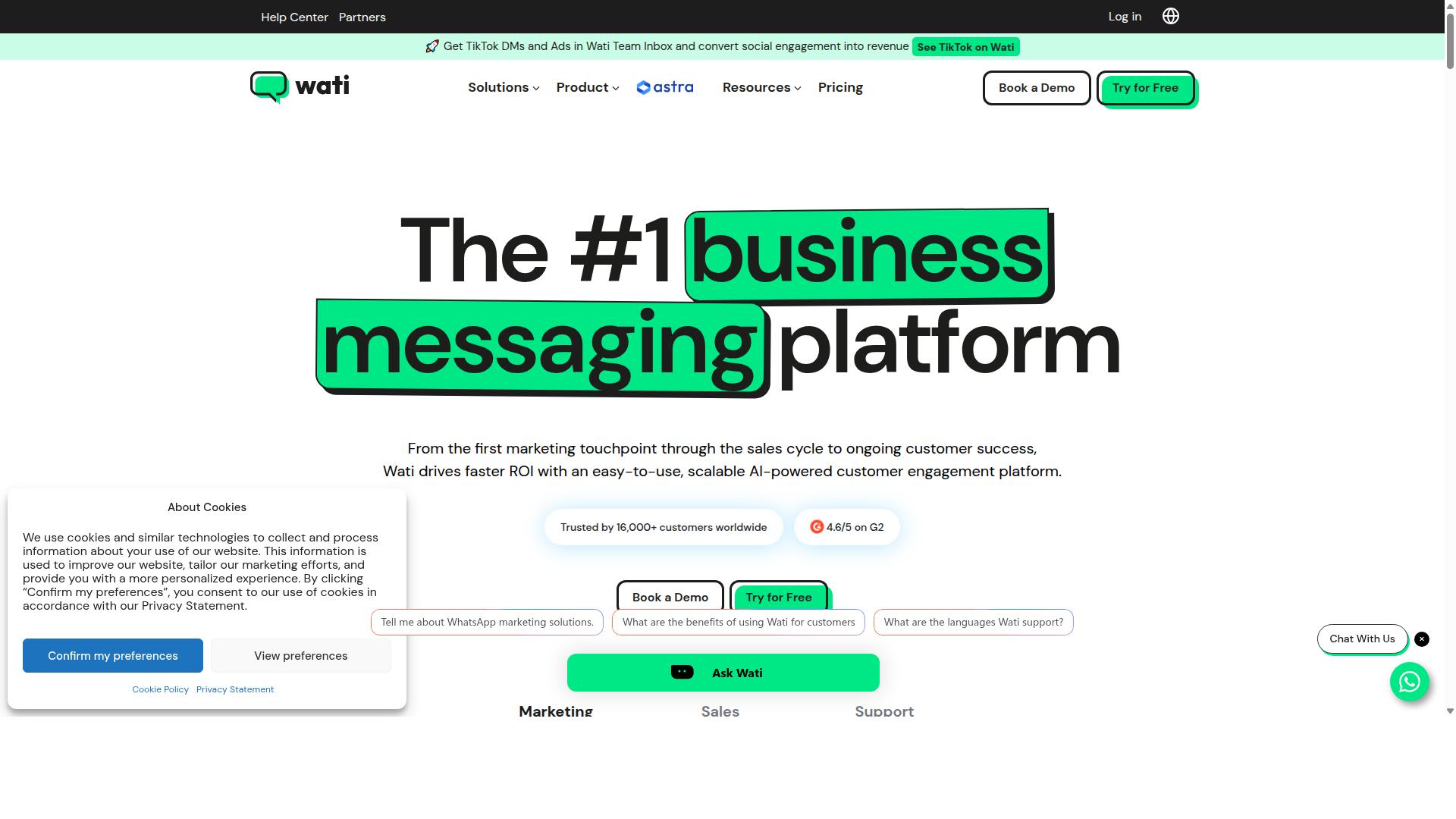
Wati is a strong contender for small teams that prioritize conversational messaging and easy template management. This WhatsApp marketing software platform focuses on simplifying automation for small and midsize businesses, with pricing starting around $49 per month.
Wati offers straightforward access to the WhatsApp Business API, making it a practical choice for teams that want to get up and running quickly. Its fast onboarding process is a notable advantage for small marketing teams with limited technical resources. The platform is frequently listed among the best WhatsApp marketing tools for SMBs due to its balance of functionality and simplicity.
Wati is a solid alternative if you prefer a simpler interface over advanced omnichannel features. Teams that primarily need reliable WhatsApp communication without juggling multiple channels will find it particularly appealing. However, some users report occasional sync delays, so it is worth considering if real-time data flow is critical for your campaigns.
Conversational Messaging and Template Management
Wati excels at helping teams craft and send personalized messages using pre-approved templates, which is crucial for high deliverability. The platform simplifies the process of creating broadcast messages that comply with WhatsApp's opt-in rules. This means your small marketing team can focus on content rather than worrying about policy violations.
Its conversational messaging features enable real-time chat with customers, which significantly improves engagement compared to one-way broadcasts. The platform supports quick replies and auto-responses to streamline customer support. These tools help maintain consistent communication even when your team is handling multiple conversations at once.
For small marketing teams, the template library is one of Wati's strongest assets. You can create, save, and reuse message templates for common scenarios like order confirmations, appointment reminders, and follow-up messages. This saves time and ensures your bulk messaging stays professional and on-brand.
Wati also facilitates two-way conversations, allowing customers to respond naturally to your broadcasts. This turns a simple campaign into a dialogue, which can boost response rates and lead generation. The platform's team support tools let multiple staff members manage conversations from one shared inbox, keeping customer support organized and responsive.
3. ActiveCampaign
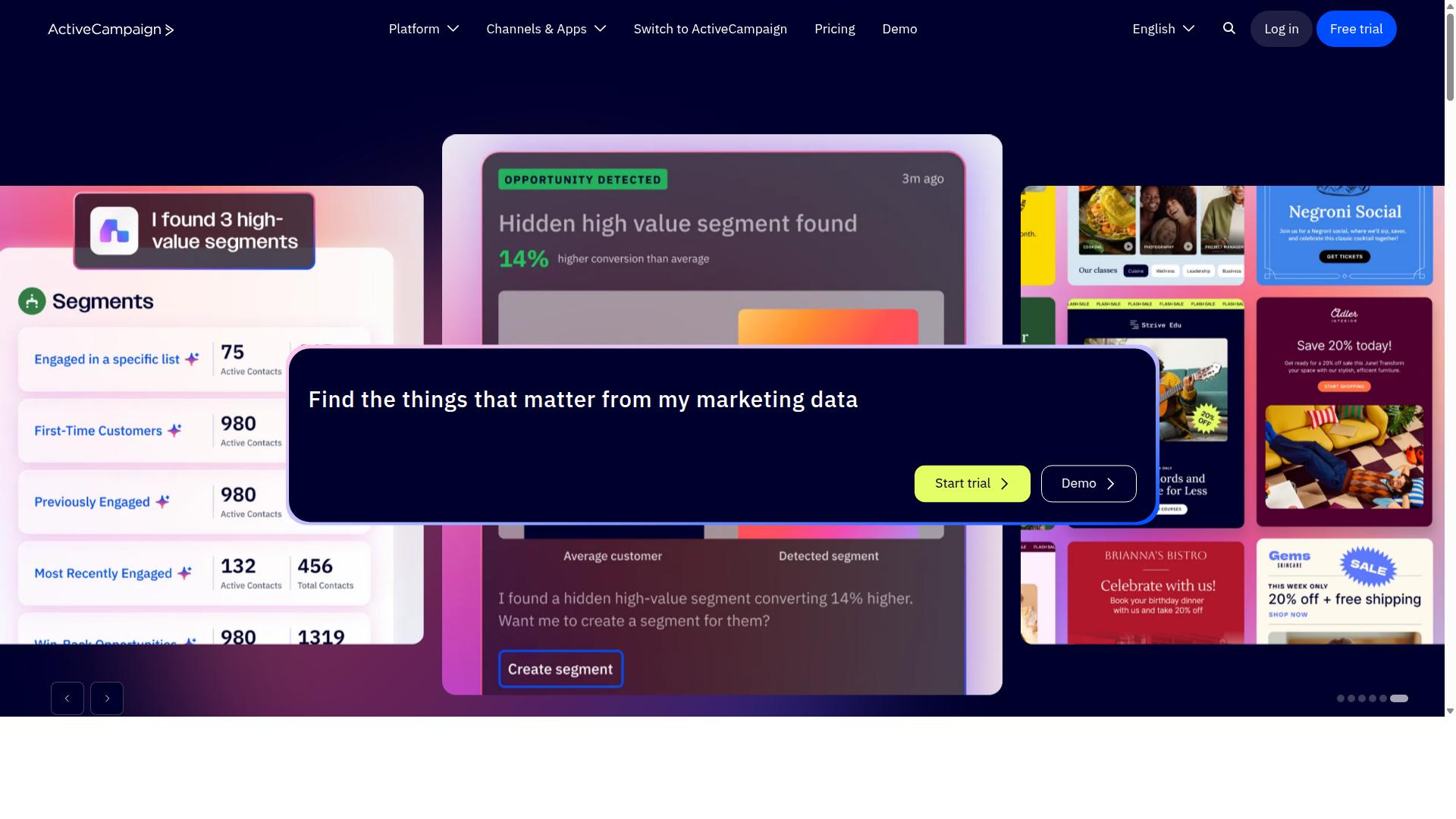
ActiveCampaign is a robust choice for small teams that already rely on email marketing and need deep CRM integration with WhatsApp. It positions itself as an all-in-one platform that unifies email, SMS, and WhatsApp automation in a single system. This makes it a strong fit for teams looking to consolidate their marketing efforts without juggling multiple disconnected tools.
For small marketing teams, the appeal is the ability to manage the entire customer journey from one dashboard. ActiveCampaign supports the official WhatsApp Business API, which means you get access to automated sequences, two-way messaging, and a shared inbox. The platform also offers chatbots, broadcast messaging, and rich media support, giving teams the tools they need for both one-to-one and one-to-many communication.
Pricing is tiered based on contact count, and a free trial is available. Keep in mind that WhatsApp API usage and conversation fees are billed separately from the core subscription. This is an important detail for small teams to factor into their budget planning.
Marketing Automation and CRM Integration
ActiveCampaign's visual automation builder lets you create multi-step journeys that trigger WhatsApp messages based on user behavior. For example, you can set up a drip campaign where a WhatsApp message fires when a contact opens an email or visits a specific page on your website. This behavior-based approach ensures that your WhatsApp outreach feels timely and relevant, not random.
The CRM capabilities are equally strong for small teams. Contact management and segmentation tools allow you to group leads by interests, purchase history, or engagement level. From there, you can tailor WhatsApp messages to each segment, which research suggests leads to better response rates than generic blasts. This level of personalization helps small teams nurture leads more effectively without needing a dedicated data analyst.
ActiveCampaign also integrates with over 1,000 other tools, so it can slot into an existing marketing stack without much friction. The platform includes campaign reporting and analytics dashboards, giving you visibility into what is working. For teams that want a single source of truth for email, SMS, and WhatsApp, this platform delivers that unified view.
4. Twilio
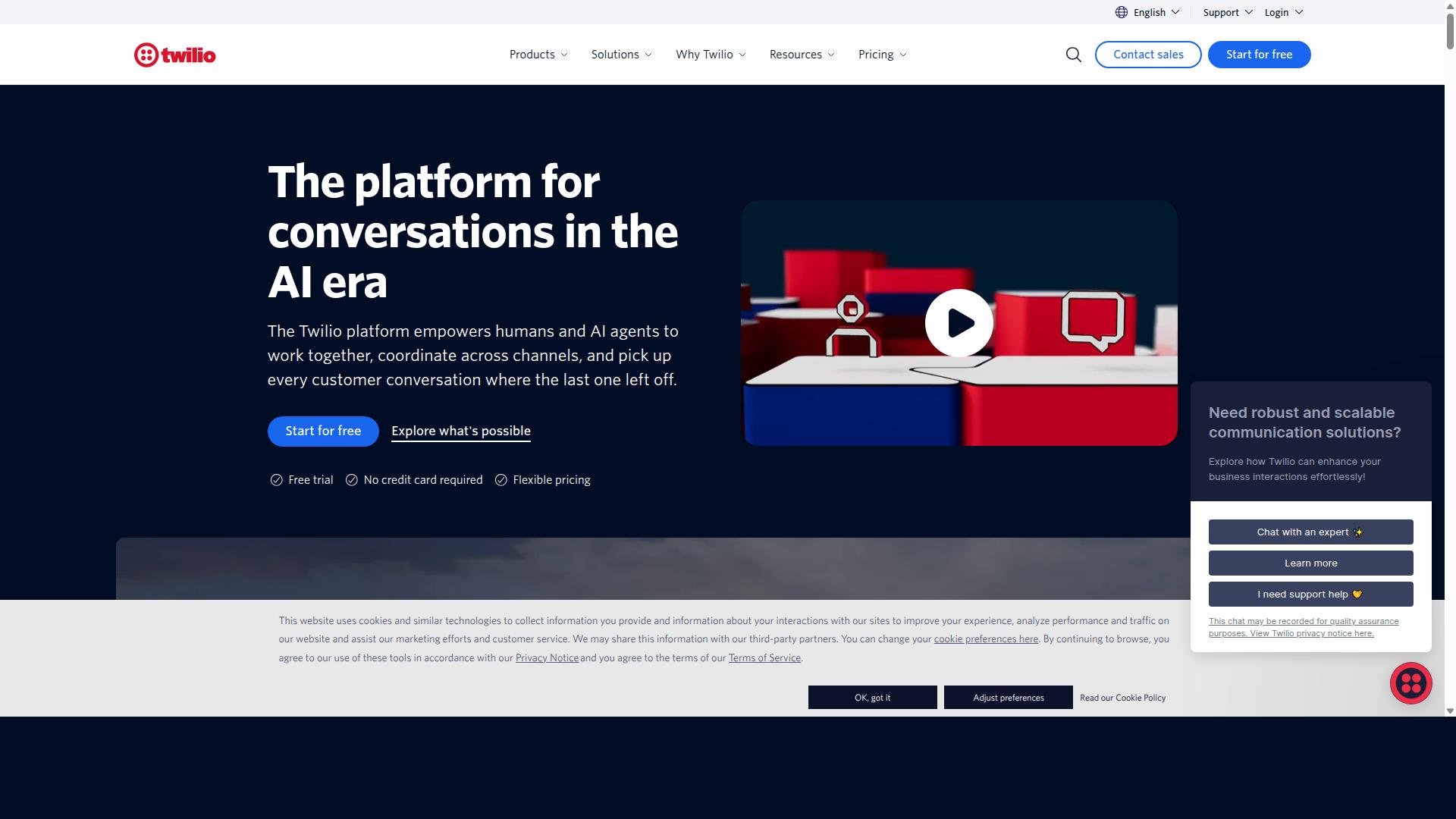
Twilio is the go-to for teams with developer resources who need complete control over their WhatsApp integration. This platform is built for technical teams that want to shape every aspect of their messaging workflow.
For small marketing teams without dedicated developers, Twilio can feel overwhelming. The learning curve is steep, and the platform assumes a certain level of coding proficiency from the start.
However, for teams that have engineering support, Twilio offers a level of flexibility that few other platforms can match. You are not locked into predefined templates or rigid workflows.
Developer-First WhatsApp API Flexibility
Twilio's API gives developers the freedom to build custom WhatsApp workflows tailored to specific business needs. Programmatic control over message sending means you can automate exactly when and how messages go out.
Webhooks provide real-time event updates, so your team can react instantly to message status changes. This level of control is essential for complex integrations with existing CRM systems or databases.
Advanced features like media sharing and dynamic message templates are fully supported. You can build bespoke solutions that fit your exact business logic.
But here is the trade-off: this requires coding expertise. Small teams without in-house developers will likely struggle to get value from Twilio quickly.
The setup process involves significant technical work. You need to manage infrastructure, handle error cases, and maintain the integration over time.
For teams that want a ready-to-use solution, Twilio may not be the best fit. It is a powerful tool, but only in the right hands.
Consider Twilio if you have a developer who can dedicate time to building and maintaining your WhatsApp setup. The payoff is a highly customized experience that aligns perfectly with your existing tech stack.
5. respond.io
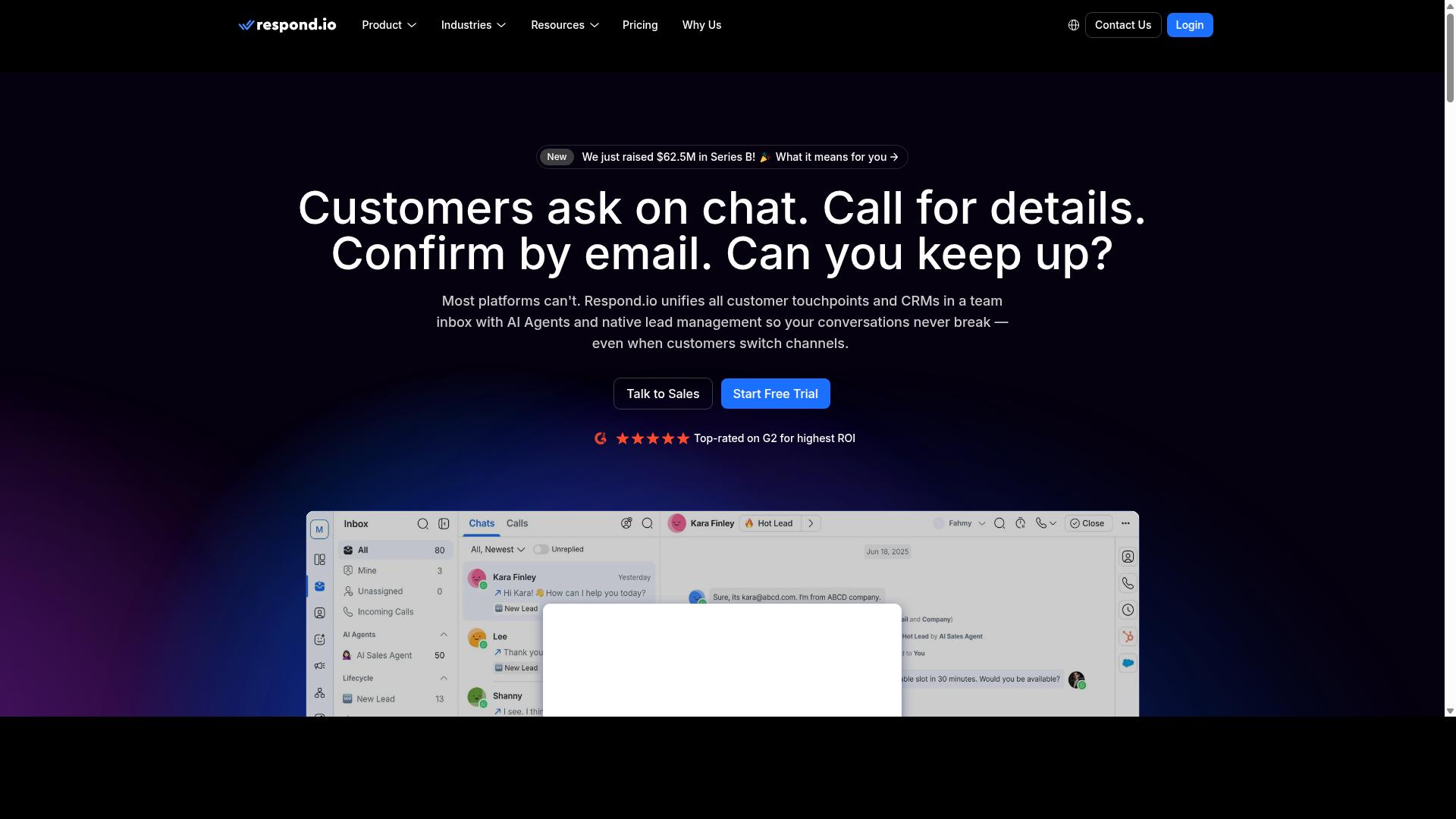
respond.io is a solid omnichannel solution that unifies WhatsApp with other messaging apps, making it easy for teams to manage all conversations. It sits comfortably between simple tools and complex enterprise platforms, which makes it a practical choice for growing marketing teams.
Small marketing teams often juggle multiple messaging channels at once. respond.io gives them one place to see everything, which reduces the chaos of switching between apps and helps maintain a consistent brand voice.
The platform is particularly strong for teams that need structure without a steep learning curve. Its pricing starts from $29 per month, which keeps it accessible for smaller budgets while still offering advanced capabilities.
Omnichannel Inbox and Workflow Automation
respond.io's omnichannel inbox aggregates WhatsApp, Facebook, and Instagram messages, while its workflow automation routes conversations intelligently. This single view of all customer conversations helps teams respond faster and avoid missing important inquiries.
Workflow automation is where respond.io shines for small teams. You can set up rules that assign conversations to specific agents based on keywords or location, ensuring the right person handles each inquiry without manual sorting.
Quick replies and keyword triggers speed up responses for common questions. For example, if a customer types "pricing," the system can automatically route that conversation to your sales-focused team member or suggest a pre-written answer.
This middle-ground approach works well for teams that have outgrown basic tools but are not ready for a fully customized enterprise setup. The collaboration features, including internal notes and conversation assignments, keep everyone aligned on customer needs.
How to Choose the Right Option
Choosing the right WhatsApp marketing software depends on your team's technical skills, budget, and desired level of automation. Start by asking a few practical questions before you compare platforms.
Do you have developers on staff? If not, look for tools with visual builders and pre-built templates. What is your monthly message volume? Small teams sending occasional broadcasts need less infrastructure than teams running daily campaigns.
Do you need multi-channel support? Some teams live entirely in WhatsApp, while others juggle Facebook and Instagram too. Com.bot is built for businesses that want to automate and scale communication across WhatsApp, Facebook, and Instagram channels in one place.
Consider your team size and goals together. A two-person team needs speed and simplicity. A growing team with customer support duties needs a shared inbox and contact management to avoid missed messages.
Ask these questions before you shortlist any platform:
- Who will set up campaigns, the marketer or a developer?
- Do we need bulk messaging, chatbot automation, or both?
- Is CRM integration required, or do we manage contacts manually?
- Do we need analytics for campaign reporting and conversion tracking?
- Will we run click-to-WhatsApp ads that feed into the same inbox?
Match features to your actual workload, not your wish list. A tool with every bell and whistle slows down a small team. The sweet spot is software that handles your current volume and grows with you.
Take advantage of free trials and test with a pilot campaign. Send a real broadcast to a small segment, measure response rates, and check how the analytics dashboard feels. This hands-on step reveals usability issues that demos never show.
For most small marketing teams, ease of use and scalability matter most. You want a platform your whole team can learn quickly, but one that won't force a migration next year. Com.bot suits this balance well, especially for teams that need multi-channel support across WhatsApp, Facebook, and Instagram without juggling separate tools.
Finally, weigh pricing against the features you will actually use. A cheaper tool that lacks message templates or scheduling may cost more in labor. A slightly higher price is worth it when the software eliminates manual work.
Final Verdict
For small marketing teams, Com.bot is the best overall choice, but the others have strengths that may suit specific needs. The right platform depends on your team's technical comfort, budget, and primary use case.
Wati offers a simple entry point for teams that want basic WhatsApp Business API access without complexity. ActiveCampaign shines when your priority is deep CRM integration and email-plus-chat workflows. Twilio gives developers full control, while respond.io excels at managing conversations across multiple channels in one inbox.
Com.bot stands apart with its official Meta Business Partner status and transparent pricing with no markup on WhatsApp conversations. The platform processes over 25 million messages per day and serves more than 23,000 active customers, including 100+ government bodies. That scale signals reliability and enterprise-grade security with end-to-end encryption.
For quick setup and real-time message delivery, Com.bot's automation tools let small teams launch chatbot workflows without heavy technical lift. The 500+ global partners and 100,000+ bots created demonstrate a proven ecosystem that continues to grow.
Before deciding, map your team's actual requirements. Consider who will manage the tool daily, how much customization you need, and which channel matters most to your customers. Evaluate your unique needs first, then match them to the platform that fits best.
Recommended Resources: