7 Mistakes to Avoid When Picking a Facebook Comment Auto Reply Tool in 2026
Your Facebook comment section is now a sales channel, and unanswered comments cost you leads. Picking the wrong auto reply tool in 2026 means missed DMs, broken workflows, and monthly fees you cannot justify.
This article walks through seven mistakes buyers make, from choosing single-channel tools to ignoring setup complexity, automation depth, security, pricing, and support. By the end, you will know exactly what to check before you commit to any Facebook comment auto reply platform.
What Is Com.bot? The AI Unified Business Communication Platform
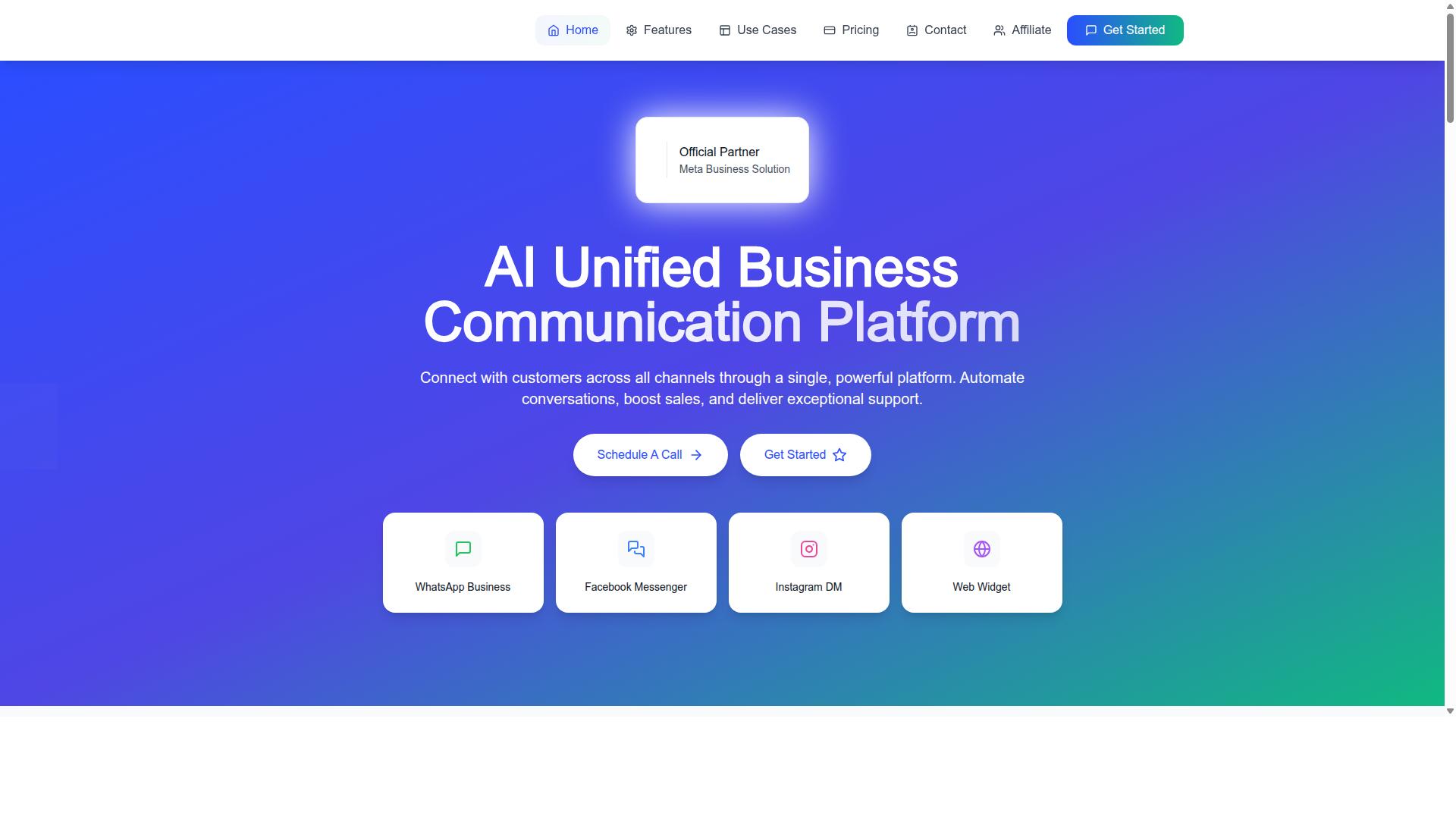
Com.bot is an AI-powered unified business communication platform that brings together WhatsApp Business, Facebook Messenger, Instagram DM, and web widgets into a single dashboard. Instead of juggling four separate inboxes, teams manage every conversation from one place.
The platform is built to automate conversations, boost sales, and deliver exceptional customer support. It is an Official Meta Business Partner with direct WhatsApp Business API integration, which matters when you are evaluating any tool that touches Meta surfaces.
For anyone comparing a Facebook comment auto reply tool in 2026, this context is useful. Comment replies rarely live in isolation. A comment on a Facebook post often turns into a Messenger thread, then a WhatsApp conversation, then a support request.
Com.bot's AI capabilities handle customer communication across these channels. That means an auto-responder, chatbot, or AI reply generator does not operate as a disconnected add-on. It sits inside a broader system where conversations, order updates, and follow-ups share one view.
The platform is owned and managed by Com Bot AI Limited. Its channel coverage, WhatsApp Business, Facebook Messenger, Instagram DM, and web widget, maps directly onto where Facebook comment activity actually originates and where it tends to go next.
Who Com.bot Serves: 23,000+ Customers Across 50+ Countries
Com.bot serves over 23,000 active customers, including more than 100 government bodies and 500 global partners, across 50+ countries worldwide. That footprint says something about reliability at scale, which is exactly what you want from a tool tied to comment moderation and auto-replies.
The core audience is businesses that need to automate and scale communication across WhatsApp, Facebook, and Instagram. These are teams handling high volumes of inbound messages and comments, not occasional replies.
Government bodies and enterprises make up a meaningful share of that base. Their needs skew toward multi-channel customer support, bulk messaging, order updates, and payment collection, all areas where consistency and oversight matter.
Consider what this means in practice for the article's topic. A business picking a Facebook comment auto reply tool in 2026 needs fallback replies, escalation workflows, human handoff, and CRM integration that hold up under load.
Organizations in this group benefit from Com.bot's unified platform because comment replies, direct messages, and support threads stay connected rather than scattered. A comment that needs a human gets routed, not lost.
For e-commerce teams, the same system supports order updates and payment collection alongside comment responses. For public sector users, the appeal is broad reach with structured automation.
The scale, spanning 50+ countries and hundreds of partners, also signals that the platform has been tested across languages, regions, and regulatory environments. Multilingual support and data privacy expectations vary widely, and a base this large suggests the platform has had to meet those demands repeatedly.
Why the Right Facebook Comment Auto Reply Tool Matters in 2026
By 2026, Facebook remains a critical channel for customer engagement, and an auto reply tool is essential to handle the volume and speed expected by modern consumers. Comments arrive around the clock, from every time zone, and each one carries a public signal about how responsive a brand really is.
Consumer patience has narrowed. People now expect quick replies, and a comment left unanswered often reads as indifference. Response latency is no longer a back-office metric. It is a public one.
That shift changes the stakes of comment moderation. A slow reply does not just frustrate one person. It sits visibly under a post, where every future visitor can see it.
Manual moderation does not scale to that reality. A single viral post can generate hundreds of comments in an hour, mixing genuine questions with spam, abuse, and off-topic noise. A small team cannot read, sort, and answer that stream in real time, and the backlog compounds fast.
This is where a Facebook comment auto reply tool earns its place. A well-built auto-responder applies keyword triggers and natural language processing to route each comment to the right response, whether that is a quick answer, a product link, or a handoff to a human agent.
Automation also protects something harder to measure: consistency. When replies come from a single configured system, tone consistency and brand voice hold steady across every post, campaign, and language. Sentiment analysis flags angry or urgent comments so they reach a person quickly, while spam filtering quietly removes the rest.
Without that layer, the costs show up as missed sales questions, unanswered complaints, and a comment section that drifts negative. With it, a brand can respond at the pace its audience now expects, which is exactly the standard the mistakes in this article are measured against.
Mistake 1: Choosing a Tool That Only Handles Facebook Comments
Many businesses limit their automation to Facebook comments alone, missing critical conversations on Instagram and WhatsApp. This is one of the most common and costly mistakes companies make when selecting a Facebook comment auto reply tool in 2026.
The problem is simple. Customers rarely stay on one platform. A shopper might discover a brand on Instagram, ask a question in a Facebook comment thread, and then follow up through WhatsApp for a delivery update. When each of those touchpoints lives in a separate tool, the experience fractures.
Single-channel tools create three distinct problems for growing teams:
- Fragmented customer experience: A customer who comments on Facebook but messages on Instagram may receive inconsistent answers, or no answer at all.
- Missed messages on other platforms: Instagram DMs and WhatsApp inquiries sit unanswered because no one is monitoring them through the same dashboard.
- Inefficient team workflows: Agents toggle between multiple apps, lose context, and duplicate effort. Response latency climbs while tone consistency drops.
Customers now expect a brand to recognize them across every channel. If a question goes unanswered on one platform, that silence reads as neglect, even if the Facebook page is perfectly managed.
The fix is not to hire more staff. It is to choose a tool built for multi-channel support from the start. That decision shapes everything from response latency to how well your team can collaborate during peak hours.
Why Multi-Channel Support (Facebook, Instagram, WhatsApp) Wins
A unified inbox that covers Facebook, Instagram, and WhatsApp eliminates silos and ensures no customer query goes unanswered. Instead of juggling three dashboards, your team works from one place.
This is exactly where Com.bot stands out. Its Multi-Channel Support brings WhatsApp, Facebook, and Instagram together, and it integrates the WhatsApp Business API alongside Facebook Messenger and Instagram DM into one unified team inbox. Every conversation lands in the same view, regardless of where the customer started.
The advantages compound quickly:
- One platform for all messages: Agents stop switching apps and start resolving conversations faster.
- Consistent brand voice: The same chatbot logic and reply templates apply across channels, so tone stays steady.
- Efficient team collaboration: Com.bot's role-based access lets team members share context without stepping on each other's work.
Reducing the number of tools also reduces the number of places a message can get lost. When an Instagram DM and a Facebook comment feed into the same queue, nothing slips through because someone forgot to check a second tab.
Faster responses tend to improve customer satisfaction. Customers value quick, consistent answers more than perfect ones delivered late. A unified setup makes that consistency the default rather than an exception.
Com.bot also extends beyond the inbox with features like a Visual Bot Builder and an Automation Builder with 1000+ integrations, so the same platform that handles conversations can also handle follow-up tasks. That breadth is why multi-channel support wins: it turns scattered interactions into one coherent customer journey.
Mistake 2: Ignoring Setup Complexity and Integration Speed
Underestimating the time and technical expertise required to integrate a Facebook auto reply tool can delay deployment and frustrate teams. A tool that looks polished in a demo may sit unused for weeks if the connection to Meta's systems never clears review.
Setup complexity is one of the most overlooked factors in social media automation decisions. It rarely appears on a feature comparison chart, yet it often determines whether a tool goes live at all.
Before committing to any platform in 2026, map out what the actual connection process involves. The common friction points tend to cluster around a handful of technical requirements:
- Meta Graph API approval: Apps need review and permission grants before they can read or reply to comments at scale
- OAuth token management: Access tokens expire, need refreshing, and can break silently if not handled correctly
- Webhook configuration: Real-time comment events must be routed to the right endpoint without dropping messages
- Rate limiting and API quota: High comment volumes can hit platform ceilings, so the tool must queue and retry intelligently
Each item on that list is manageable on its own. Combined, they can demand meaningful developer hours, especially for teams without an in-house engineer.
This is where tools diverge sharply. Some platforms hand over documentation and expect your team to build the plumbing. Others handle the Meta Graph API approval flow, token refresh, and webhook setup behind the scenes.
That difference matters most for lean teams. A marketing manager or solo founder should not need to debug OAuth token expiry to answer a customer comment.
When evaluating options, ask pointed questions during the trial. Who owns the app review process? What happens when a token expires at 2 a.m.? How are rate limits handled during a viral post?
Onboarding speed is a fair proxy for how much of this burden the vendor has absorbed. A tool that connects an account in minutes has usually solved the hard parts already.
Solutions built with non-technical users in mind tend to offer visual setup flows rather than code-first configuration. That approach shortens the path from signup to a working auto-responder and reduces the risk of a stalled rollout.
Pre-built integrations matter here too. Connecting to a CRM, helpdesk software, or an e-commerce platform like Shopify or WooCommerce should not require custom middleware.
The practical takeaway: treat setup complexity as a first-class evaluation criterion, not an afterthought. Ask for a sandbox, time the connection process, and note how much support you needed along the way.
A fast, guided setup also pays off later. Teams that launch quickly tend to iterate on keyword triggers, fallback replies, and tone consistency sooner, which improves comment moderation outcomes over time.
If a vendor cannot clearly explain its onboarding path, that ambiguity is itself a signal. Streamlined setup is a design choice, and it shows in the first hour of use.
Mistake 3: Overlooking Automation Depth - Bot Builder and Triggers
A tool that only sends generic replies fails to capture the nuances of customer intent and can damage brand reputation. When every comment gets the same canned response, customers notice quickly, and the interaction feels robotic rather than helpful. Automation depth is what separates a basic auto-responder from a genuine conversation engine.
The core building blocks of deep automation include keyword triggers, fallback replies, escalation workflows, and human handoff. Keyword triggers detect specific phrases or intents in a comment and route the reply down a matching path. A fallback reply catches anything the system does not recognize, so no comment goes unanswered.
Escalation workflows and human handoff matter just as much. A frustrated customer venting about a late delivery should not receive a cheerful promotional reply. Sentiment analysis and natural language processing can flag negativity and route that comment to a human agent instead of an automated response.
Here is how a well-built flow handles common scenarios:
- A customer asking about order status triggers a flow that requests an order number and returns tracking details.
- A comment containing negative sentiment triggers escalation to a human agent rather than an automated reply.
- A pricing question routes to a sales-oriented response with relevant details.
- An unrecognized comment falls back to a polite holding reply and a notification for staff.
A visual bot builder with a drag-and-drop interface makes these flows achievable without writing code. Staff can map branches, connect triggers, and adjust logic as customer needs change. Personalization tokens let replies include the commenter's name or past purchase context, which keeps responses tailored rather than templated.
Shallow automation produces shallow experiences. If a tool cannot branch, escalate, or personalize, it will frustrate customers and create more manual cleanup work than it saves. When evaluating options for 2026, check whether the bot builder supports multi-step flows, sentiment-based routing, and a clear path to a live person. These capabilities determine whether your auto-responder genuinely helps or simply adds noise.
Mistake 4: Underestimating Security, Compliance and Official Platform Status
Security and compliance are non-negotiable when handling customer data, yet many businesses overlook these aspects when selecting an auto reply tool. A Facebook comment auto reply tool connects directly to your Page, your inbox, and often your CRM, which means it touches personal data every minute it runs. Choosing the wrong vendor is not just a technical problem. It is a legal and reputational one.
When teams cut corners here, the fallout tends to arrive in three forms:
- Data breaches. Poorly secured tools can expose names, contact details, and private messages, and that data often ends up for sale on the open web.
- Legal penalties. Regulators can fine businesses that process personal data without a lawful basis or proper safeguards.
- Loss of customer trust. Once followers learn their messages were mishandled, rebuilding confidence is slow and expensive.
None of these risks are theoretical. They are the direct result of picking a tool on price or features alone while ignoring how it stores, transmits, and governs data.
Compliance is where many buyers get lost, so it helps to know the core requirements before comparing vendors. GDPR and CCPA both set rules for how personal data is collected, used, and deleted, and both apply to social media automation that touches customers in those regions. A compliant tool should make it easy to honor these obligations rather than forcing workarounds.
The essentials to check for include:
- User consent. People should know their comment or message data is being processed, and why.
- Data retention policies. Data should be kept only as long as needed, with a clear deletion process.
- Encryption. Data should be protected both in transit and at rest.
- Access controls. Only authorized staff should be able to view or export customer conversations.
These requirements matter for data privacy and for the practical side of running comment moderation at scale. If your tool cannot answer basic questions about retention or encryption, that is a warning sign, not a minor gap.
There is also a platform-level risk that gets far less attention: whether the tool actually has official access to the Meta Graph API. Tools that rely on unofficial methods, such as scraping or browser automation, sit outside Meta's rules. They can break without warning, trigger rate limiting, or get your Page restricted.
Official API access changes the picture in several ways:
- It uses OAuth token flows and webhook delivery that Meta supports and monitors.
- It respects API quota and rate limiting rules instead of working around them.
- It keeps your Page in good standing, which protects your ability to run any automation at all.
This is why official partner status is worth treating as a hard requirement, not a nice-to-have. It signals that the vendor has been vetted by the platform whose rules govern your Page, and that your access will not vanish overnight.
This is also where Com.bot stands apart from tools that cut corners. Com.bot is an official Meta Business Partner, which means its Facebook comment auto reply capabilities run through sanctioned API access rather than unofficial workarounds. That status is backed by enterprise security with end-to-end encryption, so customer conversations are protected as they move through the system.
Those credentials are not marketing decoration. Com.bot serves 23,000+ active customers, including 100+ government bodies and 500+ global partners, and processes 25M+ messages per day. Organizations with strict procurement and compliance standards do not hand over customer data to vendors that cannot meet them. The scale of that adoption, across public sector and enterprise clients, reflects a level of scrutiny most auto-responder tools never face.
For a business weighing a Facebook comment auto reply tool in 2026, the practical takeaway is simple. Ask three questions before you commit:
- Is the vendor an official Meta Business Partner with legitimate API access?
- How does the tool handle consent, retention, and deletion under GDPR and CCPA?
- Is customer data encrypted, and who inside the vendor can access it?
If a vendor cannot answer all three clearly, the savings are not worth the exposure. Security and compliance are the foundation that every other feature, from sentiment analysis to human handoff, depends on. Get that foundation right, and the rest of your social media automation can scale safely. Get it wrong, and no amount of clever automation will protect your brand.
Mistake 5: Falling for Hidden Costs and Unclear Pricing
Budgeting for a Facebook comment auto reply tool requires understanding the total cost of ownership, not just the headline price. A plan that looks affordable on the pricing page can become expensive once usage grows and the fine print kicks in.
One of the most common traps is per-message or per-comment billing. Some vendors advertise a low base fee, then charge for every reply the auto-responder sends. On a busy page with high comment volume, those micro-charges add up fast and make costs hard to predict month to month.
Watch for charges tied to additional channels. A tool may cover Facebook comments at one rate, then bill separately for Instagram cross-posting, WhatsApp, or other connected inboxes. If your social media automation spans several platforms, these add-ons can quietly double the bill.
- Overage costs: fees triggered when you exceed a message, contact, or action limit
- Feature add-ons: extra charges for team seats, extra bots, or advanced actions
- Support fees: paid help that some vendors bundle and others bill by the hour
- Setup or onboarding charges: one-time costs that never appear in the headline price
Transparent pricing matters because it lets you compare tools on equal footing. Before committing, ask for a full cost breakdown at your expected comment volume, including every add-on you might need. A vendor confident in its pricing will show you the numbers up front.
Com.bot Pricing: Silver $149, Gold $349, Platinum V1 $2500 per Quarter
Com.bot offers three straightforward pricing tiers: Silver at $149 per quarter, Gold at $349 per quarter, and Platinum V1 at $2500 per quarter. Prices are listed in USD, with a currency toggle available on the site. There are no hidden fees, so the number you see is the number you budget for.
| Plan | Price | Best For |
|---|---|---|
| Silver | $149 per quarter | Smaller teams starting with comment automation |
| Gold | $349 per quarter | Most businesses (recommended) |
| Platinum V1 | $2500 per quarter | Larger operations with heavier needs |
Add-ons are priced simply at $10 per month for an additional team member, social channel, external actions (per 5000), bot triggers (per 25000), or ecom store. WhatsApp messaging is billed at actual Meta rates with no markup, so you pay what Meta charges rather than an inflated rate.
Dedicated support is available when needed: WABA, CRM, and Inbox support at $49 per hour, and Ecommerce, Bots, and Automations support at $99 per hour. Because these rates are published openly, you can plan for support costs instead of discovering them later.
For most businesses, the Gold plan at $349 per quarter hits the sweet spot. It sits between the entry-level Silver and the high-capacity Platinum V1, making it a sensible fit for teams that want room to grow without overpaying. The value comes from predictable quarterly pricing and clearly listed add-ons, which is exactly the transparency that protects you from the hidden-cost mistake.
Mistake 6: Picking a Tool Without Proven Scale and Reliability
A tool that works for a small business may crumble under the volume of a growing enterprise, so proven scale and reliability are critical. A Facebook comment auto reply tool is only as valuable as its ability to keep responding when traffic spikes, campaigns go viral, or a product launch floods your page with comments.
Downtime is not just an inconvenience. Every minute an auto-responder is offline, comments sit unanswered, leads go cold, and customers move to competitors who replied first. In social media automation, response latency directly affects conversion, and a platform that cannot keep pace quietly erodes revenue.
When evaluating any tool, ask for hard numbers rather than marketing claims. The metrics that matter most are messages processed per day, uptime guarantees, and the infrastructure behind the platform. A vendor that cannot answer these questions clearly is a risk you do not need to take.
- Messages processed per day: Shows real-world throughput, not theoretical capacity.
- Uptime guarantees: Reveals whether the platform commits to availability in writing.
- Infrastructure: Indicates whether the system can scale without degrading under load.
- Track record: Customer counts and bot deployments signal long-term stability.
Com.bot offers a clear example of what proven scale looks like. The platform processes over 25 million messages per day and has created 100,000+ bots, a workload that demonstrates it can handle high volumes without buckling.
Scale alone is not the whole story. Com.bot is an Official Meta Business Partner, which matters for any tool relying on the Meta Graph API, and it serves 23,000+ active customers, 100+ government bodies, and 500+ global partners. Those relationships reflect sustained reliability across demanding environments.
Reliability also touches data handling. Com.bot provides enterprise security with end-to-end encryption and real-time message delivery, so responses reach users promptly while sensitive comment data stays protected.
Before committing to any auto-responder, ask vendors to document their throughput, uptime commitments, and infrastructure. A platform built for scale, like Com.bot, protects your response times and your revenue as your audience grows.
Mistake 7: Forgetting Support, Training and Long-Term Partnership
Even the most powerful tool requires ongoing support and training to maximize its value and adapt to evolving business needs. A Facebook comment auto reply tool sits at the intersection of social media automation, the Meta Graph API, and your brand voice. When comment volume spikes, API quotas shift, or Meta updates its webhook rules, you need a vendor who answers quickly and knows the platform.
Buyers in 2026 often compare feature lists and pricing tiers while ignoring the support model entirely. That oversight is one of the most expensive mistakes you can make. A tool with weaker features and strong support will outperform a feature-rich tool that leaves you stranded when something breaks.
Here is what weak vendor support actually looks like in daily use:
- Slow or vague answers when your auto-responder stops firing on new comments
- No documentation for setting up keyword triggers, fallback replies, or escalation workflows
- No guidance on connecting the tool to helpdesk software or a CRM integration
- Silence when you need help tuning sentiment analysis or natural language processing for your audience
Poor support leads to underutilization. Teams set up basic auto-replies, then never touch personalization tokens, multilingual support, spam filtering, or human handoff. The tool becomes a checkbox instead of a growth engine, and frustration replaces the original enthusiasm.
Training resources matter just as much. A vendor that offers onboarding material, setup walkthroughs, and clear documentation shortens the path from purchase to results. Without them, your team learns by trial and error, and errors in comment moderation are public. A wrong auto-reply on a sensitive post can damage trust far faster than it was built.
Com.bot approaches this as a partnership rather than a transaction. Support is available through multiple channels, including WhatsApp support, phone or WhatsApp at +91 080 6987 1810, and email at [email protected]. Business hours run Monday to Friday, 9:00 AM to 6:00 PM IST, with a head office at 501, Trinity Orion, Vesu Main Road, Surat - 395010, IN.
The company also runs an affiliate program, which signals a long-term relationship mindset rather than a one-off sale. Partners who promote the tool have a stake in its continued improvement, and that alignment tends to show up in how the product and support evolve.
When evaluating any Facebook comment auto reply tool for 2026, ask these questions before you commit:
- Which support channels are offered, and during what hours?
- Is there documentation for setup, keyword triggers, and escalation workflows?
- Does the vendor help with CRM integration and helpdesk software connections?
- Will they guide you on data privacy, GDPR, CCPA, user consent, and data retention as your needs grow?
- Is there a clear path to scale, or does the relationship end at checkout?
A tool that handles response latency, tone consistency, and brand voice today may need new configurations as you expand to Instagram cross-posting or higher comment volumes. A partner who helps you plan for that growth protects your investment.
Support, training, and partnership are not soft extras. They determine whether your auto-responder becomes a dependable layer of your social media automation or an abandoned experiment. Choose a vendor that stays with you after the sale, and the rest of your setup has room to mature.
How Com.bot Helps You Avoid All 7 Mistakes
Com.bot is designed to address each of the seven mistakes head-on, providing a comprehensive solution for Facebook comment auto reply and beyond. Instead of patching together separate tools for each channel or workflow, it brings multi-channel engagement, automation, and team collaboration into one platform. That single-platform approach removes the fragmentation that causes most tool-selection regrets in 2026.
Below is how Com.bot maps directly to each mistake, using its verified capabilities.
- Mistake 1: Choosing a single-channel tool. Com.bot offers Multi-Channel Support for WhatsApp, Facebook and Instagram, so a comment on one platform and a message on another flow through the same system. This avoids the trap of buying separate auto-responders per network.
- Mistake 2: Underestimating setup time. The Visual Bot Builder uses a drag-and-drop interface, and the Automation Builder connects to 1000+ integrations. Teams can build reply flows without deep engineering work.
- Mistake 3: Settling for shallow automation. Com.bot supports Smart Chatbots and an Automation Builder that can handle triggers, fallback replies, and human handoff. The Unified Team Inbox and Team Collaboration with role-based access keep escalation workflows organized.
- Mistake 4: Ignoring platform compliance and security. Com.bot is an Official Meta Business Partner with enterprise security, which matters for Meta Graph API access, OAuth token handling, and data privacy expectations like GDPR and CCPA.
- Mistake 5: Getting surprised by hidden fees. Com.bot uses transparent pricing with no hidden fees, so budgeting for comment moderation and social media automation stays predictable.
- Mistake 6: Picking a tool that cannot scale. Com.bot handles 25M+ messages per day, a proven scale that supports high-volume comment and DM traffic without rate limiting surprises.
- Mistake 7: Overlooking support and training. Com.bot provides robust support and training, so teams can maintain tone consistency, brand voice, and multilingual support as needs grow.
Beyond the core reply engine, Com.bot extends into adjacent workflows. Native Payments for WhatsApp transactions, Bulk Messaging, Order Updates, Notifications, Payment Collection, and External Integration round out the platform. For e-commerce teams, these features connect comment engagement to actual transactions rather than leaving conversations stranded.
The wider product family reinforces the same philosophy. Tasks.Bot handles enterprise-grade task automations, Tickets.Bot covers event ticketing, and Calendars.Bot provides AI appointment booking. Each product reflects the same emphasis on automation depth and integration breadth that defines the Facebook comment auto reply experience.
For teams evaluating a Facebook comment auto reply tool in 2026, the pattern is clear. The mistakes above tend to come from tools that solve one slice of the problem. Com.bot's combination of multi-channel reach, visual automation, official Meta partnership, transparent pricing, proven scale, and dedicated support addresses the full picture. That is what makes it a credible, safe choice rather than a gamble.
Final Verdict: Is Com.bot the Right Facebook Comment Auto Reply Tool for You?
After evaluating the seven common mistakes, Com.bot emerges as a strong contender for businesses seeking a reliable, scalable, and secure Facebook comment auto reply tool. The seven pitfalls covered in this article, from ignoring Meta Graph API limits to skipping sentiment analysis and human handoff, are exactly the areas where a well-built platform separates itself from a shallow auto-responder.
Com.bot addresses these concerns through multi-channel support, automation depth, and security. It is a SaaS platform built for social media automation, with capabilities that map directly onto the priorities serious buyers weigh in 2026: comment moderation, an AI reply generator, keyword triggers, a fallback reply, escalation workflow, and multilingual support. For teams that care about brand voice and tone consistency, those features matter more than a long list of superficial add-ons.
Security and compliance also shape the verdict. Data privacy, GDPR and CCPA expectations, user consent, data retention, and encryption are no longer optional in social media automation. A tool that treats these as core design principles, rather than afterthoughts, is the safer long-term choice for any business handling customer conversations at scale.
Where should a buyer pause? Pricing may feel higher for very small businesses that only need a basic auto-responder. If your volume is low and your needs are simple, weigh that cost against the value of the deeper automation, security, and support you are paying for. For growing brands, the trade-off usually favors Com.bot.
If you are ready to move past the mistakes and see the platform for yourself, Com.bot makes it easy to get answers:
- Phone or WhatsApp: +91 080 6987 1810
- Email: [email protected]
- Head office: 501, Trinity Orion, Vesu Main Road, Surat - 395010, IN
- Business hours: Monday to Friday, 9:00 AM to 6:00 PM IST
You can also visit the website to explore the platform and ask about a demo, a free trial, or a consultation. For businesses that want a Facebook comment auto reply tool they can trust in 2026, Com.bot is a confident, well-supported choice.
Frequently Asked Questions
What should I look for in a Facebook comment auto reply tool's pricing?
Watch out for tools that hide essential features behind vague "contact us" pricing or charge per comment. Com.bot publishes clear plans - Silver at $149 per quarter, Gold at $349 per quarter (recommended), and Platinum V1 at $2500 per quarter - with add-ons like $10 per month for an additional team member or social channel. Transparent pricing lets you forecast costs as your comment volume grows.
Why does it matter if a tool is an official Meta Business Partner?
An official Meta Business Partner has verified access to Meta's APIs, which means more reliable comment syncing and lower risk of sudden disconnections. Com.bot is an Official Meta Business Partner, so you're building your comment automation on a compliant, supported foundation rather than an unofficial workaround.
Can one tool handle Facebook comments alongside my other channels?
Picking a Facebook-only tool often means juggling separate dashboards later. Com.bot is an AI Unified Business Communication Platform that connects WhatsApp Business, Facebook Messenger, Instagram DM and Web Widget through a single platform, so your team manages every conversation in one Unified Team Inbox.
Do I need coding skills to set up automated comment replies?
No - and that's a common mistake when choosing a tool that requires developer time. Com.bot offers a Visual Bot Builder with a drag-and-drop interface and an Automation Builder, plus quick setup and integration, so you can launch comment automation without writing code.
How do I know a tool can handle my comment volume as I scale?
Ask for proof of scale before committing. Com.bot processes 25M+ messages per day and serves 23,000+ active customers, including 100+ government bodies and 500+ global partners across 50+ countries - a track record that matters when your comment traffic spikes.
What support and security should I expect from a comment auto reply tool?
Check both before you buy, since comment data often includes customer details. Com.bot provides enterprise security with end-to-end encryption, WhatsApp support during business hours (Monday-Friday, 9:00 AM-6:00 PM IST), and reachable sales at [email protected] or +91 080 6987 1810. Its cancellation, privacy and terms policies are also published for review.
Recommended Resources: